
Why the Bedroom Matters Most in Feng Shui
When you sleep, your conscious defenses drop completely. Your environment works on you without resistance for seven to nine hours every night. What surrounds you during sleep — the colors, the placement of objects, the quality of the air, the flow of the space — matters in a way that most conscious waking environments don’t. Feng shui’s most sophisticated body of knowledge is about the bedroom, for exactly this reason.
The Commanding Position — the One Rule That Changes Everything
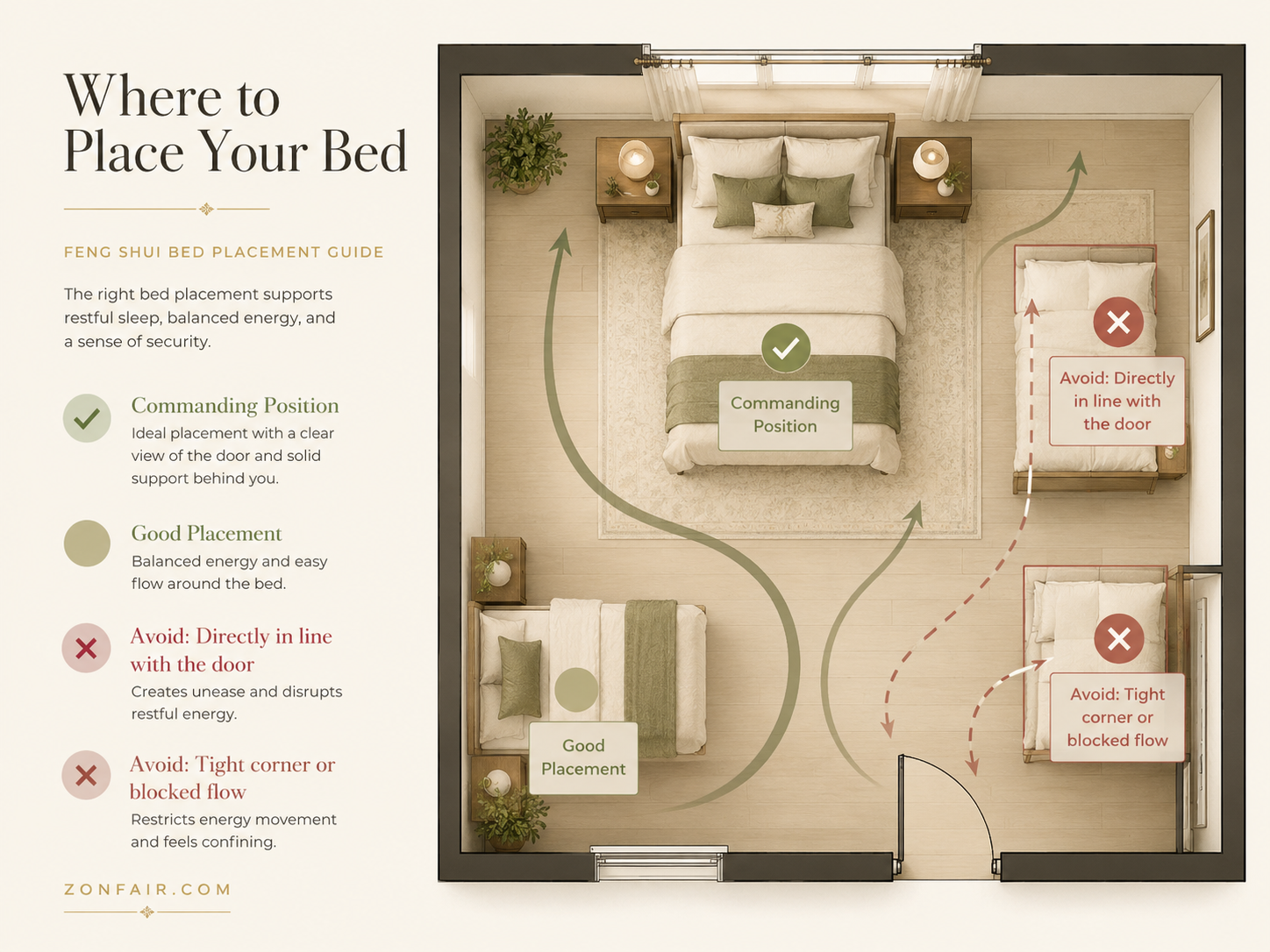
Your bed should be positioned so that when you are lying in it, you can see the bedroom door — but are not directly in line with it. This is the commanding position: you can observe without being exposed. Your nervous system interprets this as safety, allowing the quality of sleep to deepen. Never sleep with the door directly at your feet (death position in feng shui) or with your back to the door.
Bed Orientation by Personal Kua Number
Your Kua Number (calculated from birth year and gender) determines your four favorable directions. For sleep, the top of your head should ideally face your most favorable direction. For health: typically East or North. For love and relationships: typically Southwest. This is personalized feng shui — and it’s worth calculating your own number before setting up a new bedroom.

Two Nightstands — a Signal Worth Sending
In feng shui, two nightstands on either side of the bed represent balance and readiness for partnership — even if you’re currently sleeping alone. This symmetry is more than symbolic: it communicates that the relationship dynamic in the room is equal, mutual, and welcoming. Use matching lamps on both. Use similar objects. The bilateral environment is deeply calming. Explore the Zonfair nightstand collection at zonfair.com/nightstand/.
What to Remove from Your Bedroom Tonight
Mirrors directly facing the bed (amplify energy when you need stillness). Exercise equipment (creates active, yang energy incompatible with rest). Work items — laptops, documents, anything work-related (the brain cannot shift into sleep mode in a workspace). Overhead lighting without a dimmer (the brain needs gradual light reduction to initiate melatonin). These aren’t style opinions — they’re evidence-based recommendations that feng shui identified millennia before neuroscience confirmed them.